

How to write memoir
A practical guide to shaping memory into narrative

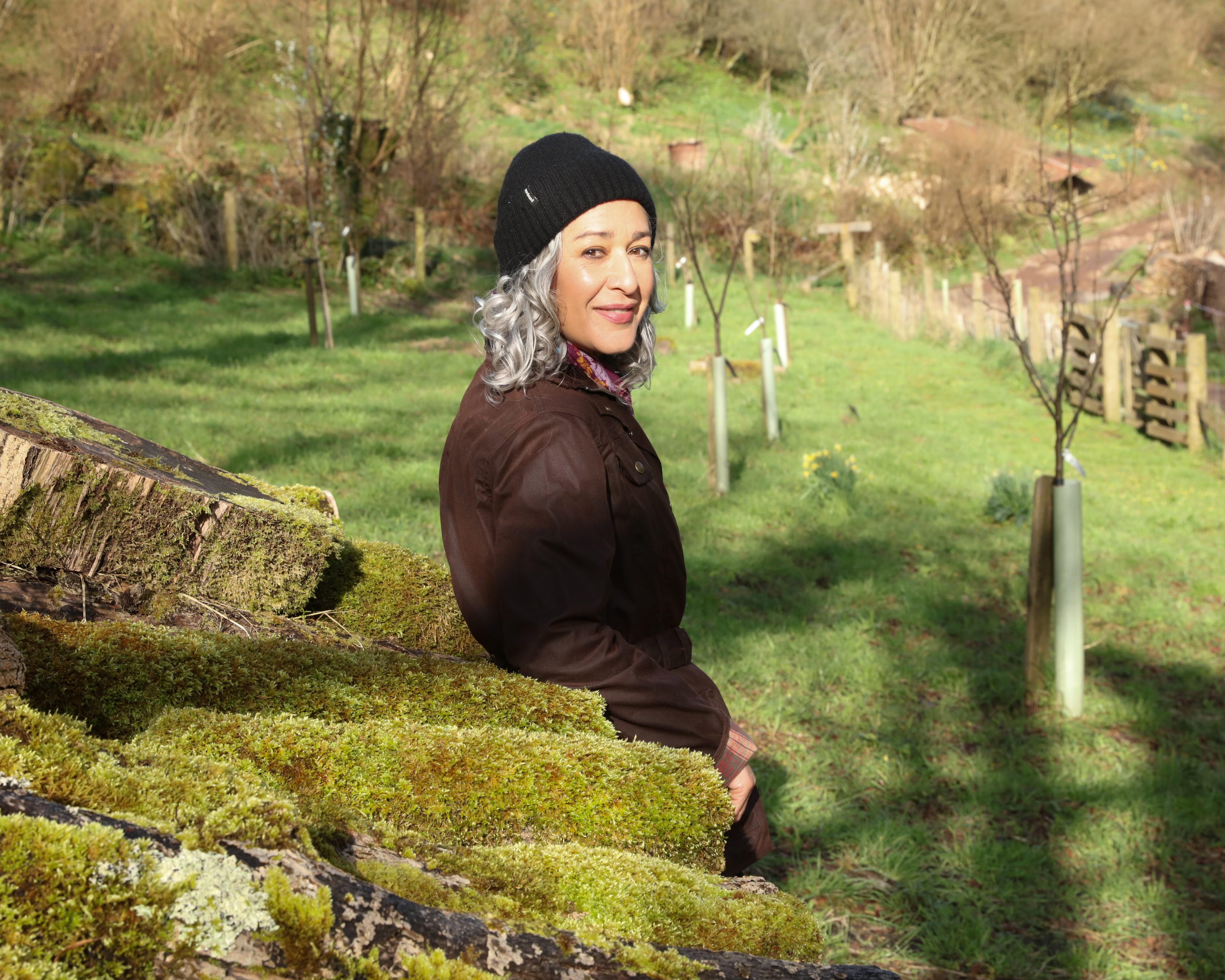
‘My favourite photograph is of me, aged two, with two men. The man carrying me is dark-skinned, with a large nose and kind eyes. He’s wearing a white sleeveless shirt. His hair is cut short to his scalp, but you can still see the Afro kink.
The other man, solid, white, beaming, his hair as black as boot polish, is in a cassock with a collar.
A Catholic priest and a Muslim mathematician.
My two fathers. I look rather cross in the photo.’
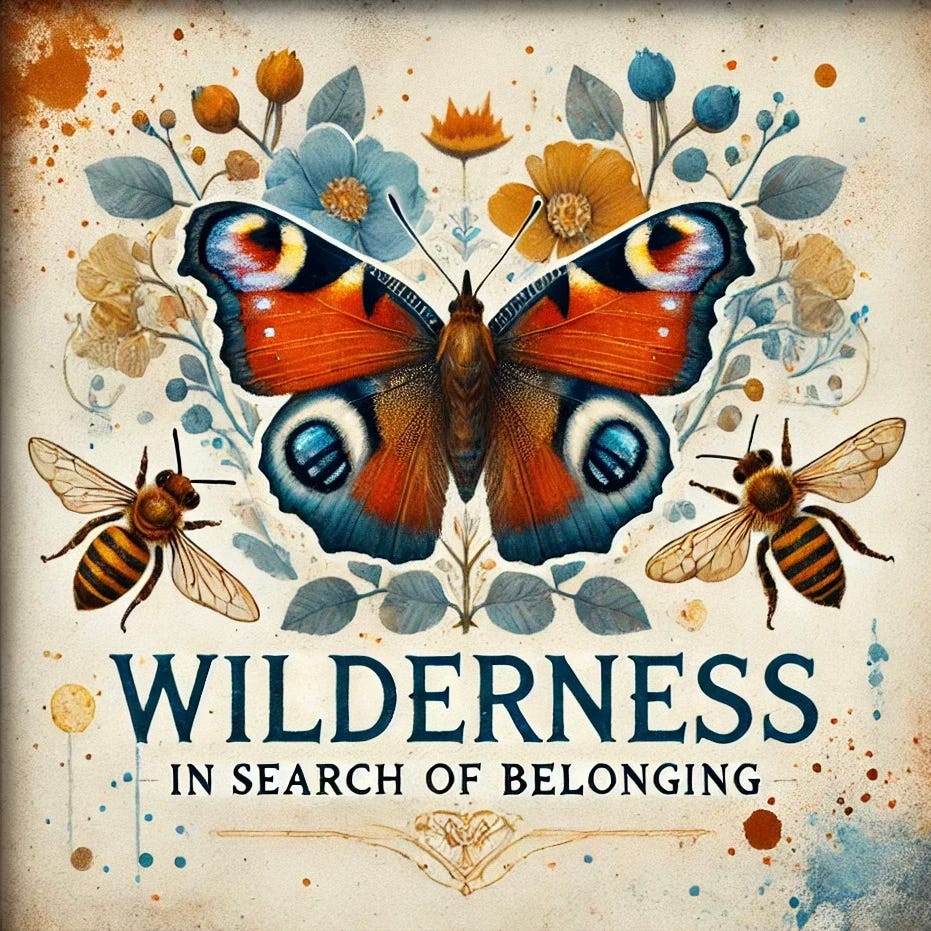
This is the opening of an early scene from my memoir, Wilderness: In Search of Belonging. (You can read the first chapter here if you’d like to.)
I’m a psychological thriller writer. I didn’t set out to write about myself. I also know from mentoring other writers, how hard it is to get a memoir published.
What changed was that we moved from inner city Bristol, a stone’s throw from the M32, to a rural enclave in the Mendip Hills of Somerset. We built our house, inherited a large plot of land and decided to rewild it — without quite knowing how or having the money or muscle to do it. I wanted to tell what I felt was an important story for our land and for nature — before it’s too late. (Did you know that in the UK alone we’ve lost 73 million birds since 1970?)
I was also still dealing with the scars of growing up dual heritage in a white family in white rural Britain and, decades later, still reeling from the discovery of a devastating family secret. I wanted to show how immersing oneself in nature and in a project can help heal trauma. As John Muir once wrote, ‘Wilderness is a necessity.’
Once I’d decided that this was a story I had to tell, I researched how to do it. And now that I’ve finished, I thought I’d share what I’ve learned with you. I’m going to deconstruct the myths surrounding memoir, how to start thinking about writing your own, and how to structure your story.
In the next article, I’ll also give you an exercise to help you start writing narrative scenes from real life, and then, for members, I’ll share how I structured Wilderness, what I left out and where I realised I was going wrong.
The biggest misconception about memoir is that it’s what happened — that it’s a chronological tale of everything which took place in your life. A ‘story should never be banal. It must be dramatic and human,’ the director Alfred Hitchcock told François Truffaut (Hitchcock: A Definitive Study of Alfred Hitchcock).
He went on to say: ‘What is drama, after all, but life with the dull bits cut out.’
Your memoir — even if it’s about miserable or traumatic events — must be entertaining. None of us is Taylor Swift, so we can’t expect people to read our story just because of who we are (thanks for this prompt, Sarah Fay, PhD!).
The second misconception about memoir is that it’s solely the story of your life. Even a celebrity can’t get away with it: we want to read Taylor’s life history to find out how she went from being an ordinary child growing up in Pennsylvania to a global superstar. We want to know why she succeeded so spectacularly.
So not only must your memoir be parts of your life without the boring bits, it also needs to have another and deeper meaning.
Take two of my favourite memoirs, Wild: A Journey from Lost to Found by Cheryl Strayed and God Is An Octopus: Loss, Love and a Calling to Nature by Ben Goldsmith. Here are the one sentence pitches:
Wild: The story of an eleven-hundred-mile solo hike that broke down a young woman reeling from catastrophe — and built her back up again.
God is an Octopus: Struggling to comprehend the shocking death of his teenage daughter, Ben Goldsmith finds solace in nature by immersing himself in plans to rewild his farm.
Neither of these books is Cheryl’s or Ben’s life stories: they are part of their lives wedded to something larger with a wider meaning. To quote Hitchcock again, people ‘don’t pay money to see a slice of life.’
If you know why you want to tell the story of your life (or recount a specific part of your life), the larger meaning or purpose behind the story, can often help shape or structure the story. You don’t necessarily have to ‘Begin at the beginning and go on till you come to the end: then stop,’ as the King said in Alice in Wonderland. In fact, I’d suggest it’s much better if you don’t.
In Wild, Cheryl walks over a thousand miles of the Pacific Crest Trail from the Mojave Desert through California and Oregon to Washington State on her own. Already we’re imagining that this is going to be an emotional and dramatic journey, one fraught with difficulty and danger. This long-distance hike is the spine from which the rest of the story hangs. As she walks, Cheryl weaves in events from her past: by the age of 22, her mother had died, her family had dissolved and she had spiralled into heroin use, resulting in a broken marriage. The walk will heal her.
In other words, the meaning of your story can often give you its structure.
In a memoir, you are the main character. As in successful fiction, you don’t have to be a likeable character, but there needs to be some elements of your journey or your personality that the reader can empathise with — and you need to change. There is a before, and there must be an after.
There is the Cheryl before, who is a mess and takes drugs and has meaningless sex with men she doesn’t like, and then there is the Cheryl after, who has been made whole by nature, physical exertion and the discovery of inner resilience.
Life, of course, doesn’t always work like this. We’re not movie characters, hiking our way to redemption. In H is for Hawk, the author, Helen Macdonald, trains a goshawk as a way of overcoming their grief for their father’s death. But the end of the book doesn’t have a neat or particularly satisfying ending. Grief doesn’t go away. We learn to live with loss and it becomes less raw: losing a loved one cannot ever result in a wholly happy ending. As Peter Bradshaw says in his review in The Guardian of H is for Hawk, it ‘can’t quite deliver the Hollywood redemption narrative that it appears to offer: the story of a woman in the depths of melancholy who is helped through the darkness and, we have to assume, out the other side, by her goshawk.’
Thus, writing memoir is about trying to find — for you — a true and authentic narrative that still satisfies a reader’s desire for story.
And if this seems somewhat unpalatable — treating yourself as the hero of the piece, ensuring your life is entertaining and not mere misery-porn — then perhaps the writing of your memoir might be a journey you embark upon for yourself, without thinking of shaping your story into a package for publication. There is plenty of evidence that writing can be of huge therapeutic benefit, with proven positive outcomes, including reduced anxiety and depression, strengthened immunity, lowered blood pressure, and better cognitive processing.
Paul Coelho wrote, ‘Tears are words that need to be written.’
They don’t have to be shared.
Exercise:
Think about:
Your external journey - what changes in the world: will you be walking the Highland Way, creating a wetland, curing malaria?
Your internal journey - what changes in you during this time?
The question you’re trying to answer (the real engine of the story) — this will be what gives your memoir deeper meaning.
Can you:
Write your memoir’s ‘driving question’ in one line?
Can you describe your ‘before’ and ‘after’ self in two lines?
Do consider becoming a member of Wild Writing with Sanjida so that you can hear more about how to structure a memoir (in 2 weeks time), join any of the masterclasses, read in-depth craft articles, and come along to our free feedback sessions and community writing group.
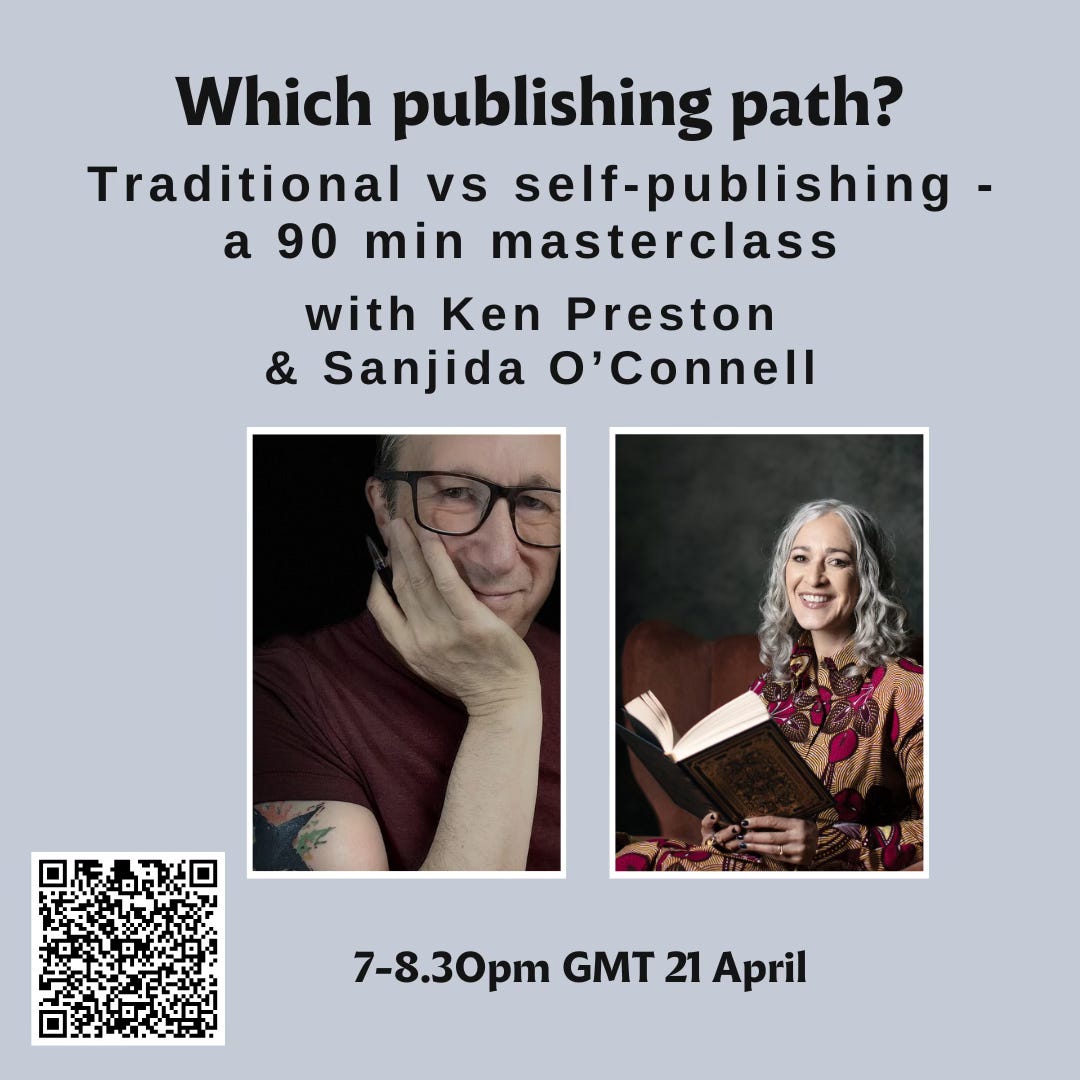
PS If you’d like to find out more about traditional publishing - how to get an agent, what you’re really likely to earn; or more about self-publishing — what it costs and how to make it work, please come along to our next masterclass.
Book via Eventbrite.
PPS The next Wild Writing Session where we work on our own writing, is tomorrow, Tuesday 31 March 7-8.30 pm GMT. The link is the Calendar for members.